Login

Over the past two decades, network usage has evolved through multiple overlapping layers rather than a single linear path.
Content distribution, real-time communication, and cloud-based interaction have coexisted, each optimized for different communication patterns. This layered evolution explains why today’s networks are still largely built on assumptions formed in earlier usage models.
Video streaming remains the dominant source of global internet traffic, accounting for approximately 60% of total traffic according to multiple industry reports. This reflects a network model primarily optimized for downstream content delivery.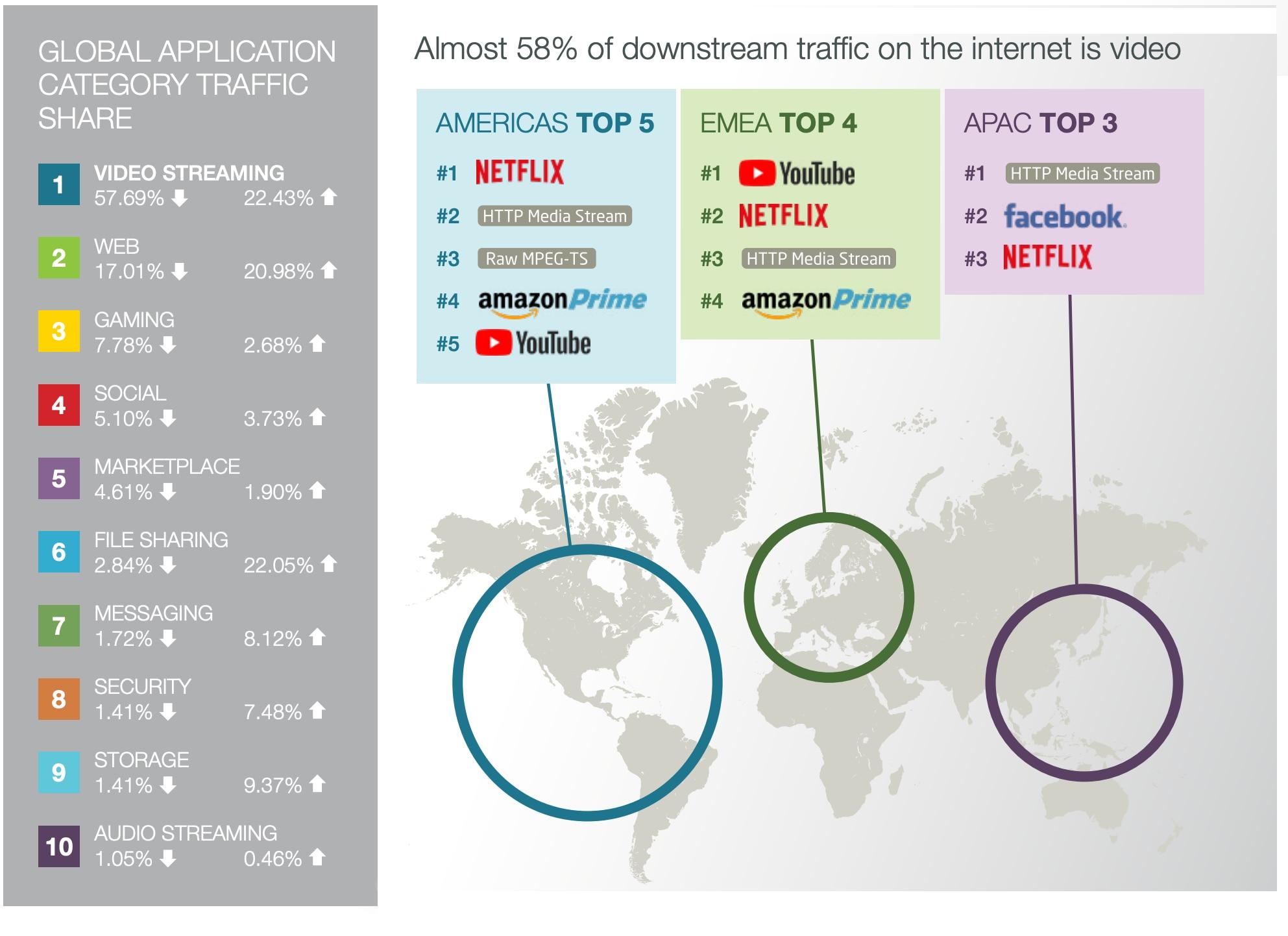
Real-time communication applications such as video conferencing introduced bidirectional and latency-sensitive traffic patterns. However, these interactions remain session-based and bounded in time.
Cloud applications further introduced persistent connections, yet traffic remains structured and relatively predictable.
Recent industry research shows that AI is not only increasing traffic volume, but fundamentally changing traffic characteristics.
According to Nokia’s projections, direct AI traffic is expected to grow at a CAGR of approximately 55%, significantly outpacing non-AI traffic at around 17%. This suggests that while AI traffic may still represent a smaller share today, its impact on network behavior will be disproportionately large. More importantly, the key change is not just scale, but the structure and behavior of traffic.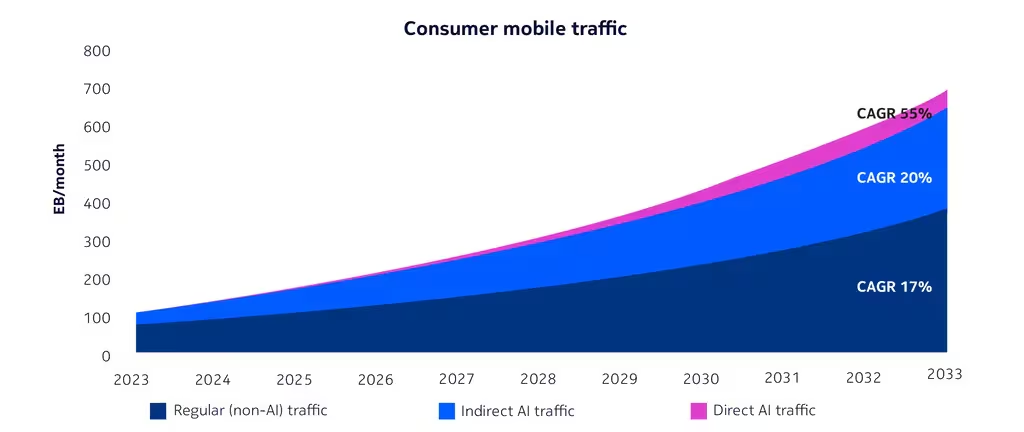
Traditional network interactions follow a request–response model with clear boundaries. AI-driven interactions, however, operate as continuous loops, where each output feeds the next input. This represents a shift from transaction-based communication to process-based interaction.
Ericsson’s 2025 analysis shows that traditional mobile traffic typically follows a 90% downlink and 10% uplink distribution.
In contrast, generative AI traffic shows a significantly different pattern, with approximately 74% downlink and 26% uplink.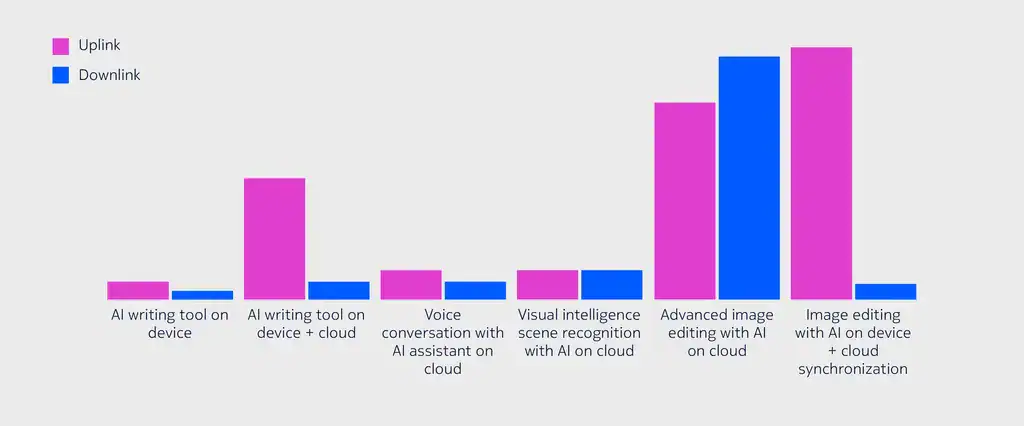
This represents a structural shift in how traffic is generated and consumed.
Upstream traffic is no longer an occasional trigger, but increasingly embedded in the interaction loop.
Upstream demand has long existed in applications such as video conferencing. However, these requirements were historically limited to specific scenarios and user groups.
AI changes this by embedding interaction capabilities across a wide range of applications. This transforms upstream demand from a specialized requirement into a baseline condition of modern interaction.
In stable and predictable environments, GPON-based access continues to provide a balanced and efficient solution.
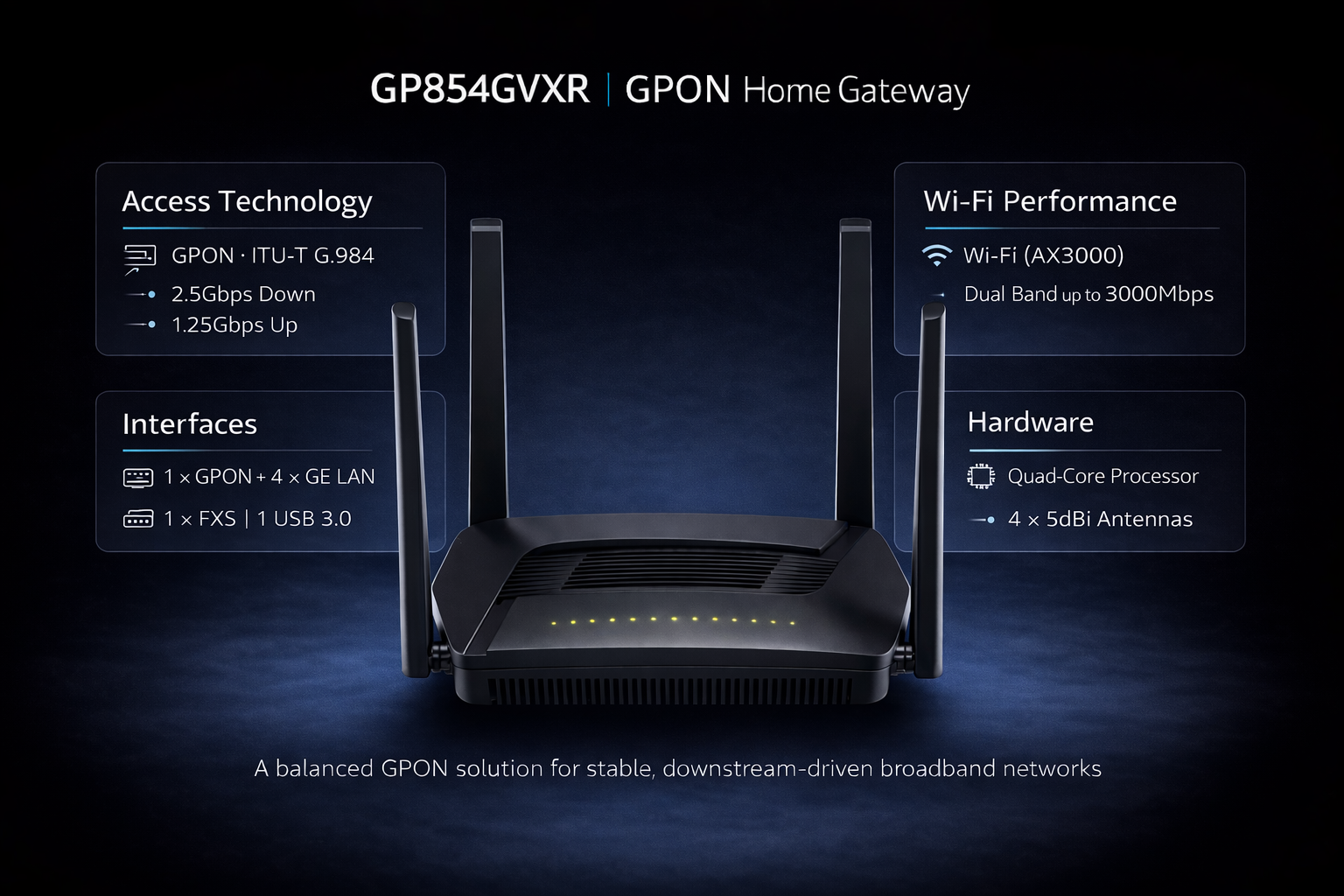
Typical GPON deployments provide around 2.5Gbps downstream and 1.25Gbps upstream capacity, which remains sufficient for traditional residential usage. These environments include households dominated by video streaming and web browsing, where traffic remains predictable and downstream-driven.
However, as interaction becomes continuous and upstream participation increases, new types of environments are emerging. Examples include AI-native households and real-time AI-assisted workflows such as content generation or coding. In these scenarios, network performance is defined by sustained interaction rather than peak speed.
XGS-PON introduces symmetrical 10Gbps upstream and downstream capacity, providing a stronger foundation for these interaction patterns
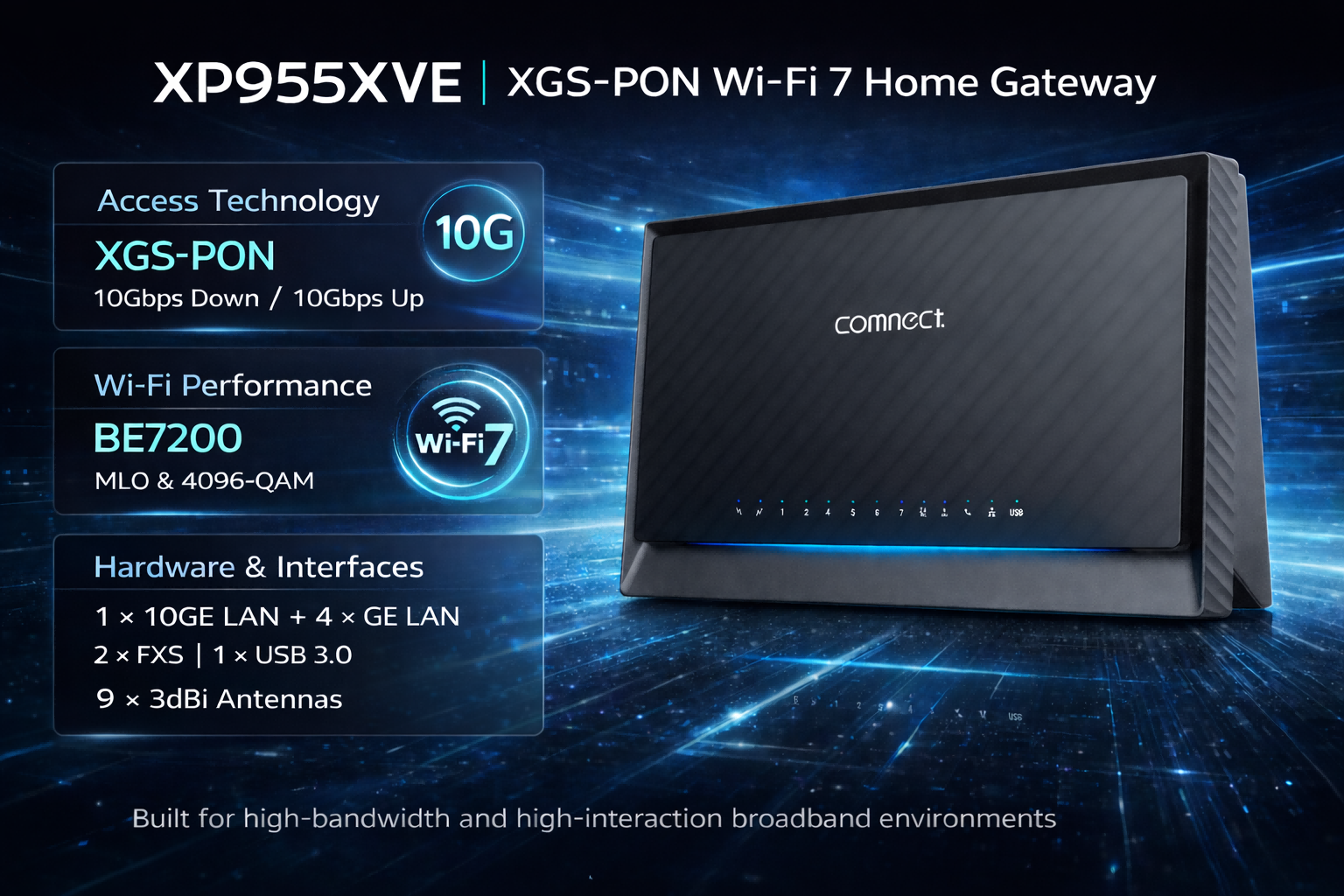
AI does not replace existing network models, but introduces new requirements alongside them. The key question is no longer which technology is more advanced. But which solution better fits the interaction model of the network. As networks evolve, the focus shifts from peak speed to sustained interaction capability